CHATTANOOGA, Tenn. (May 19, 2026) – The complete overhaul of the Walnut Street Bridge, which required the large-scale replacement and repair of steel structural supports from the suspension frame down to the piers, remains on schedule for a grand reopening in September.
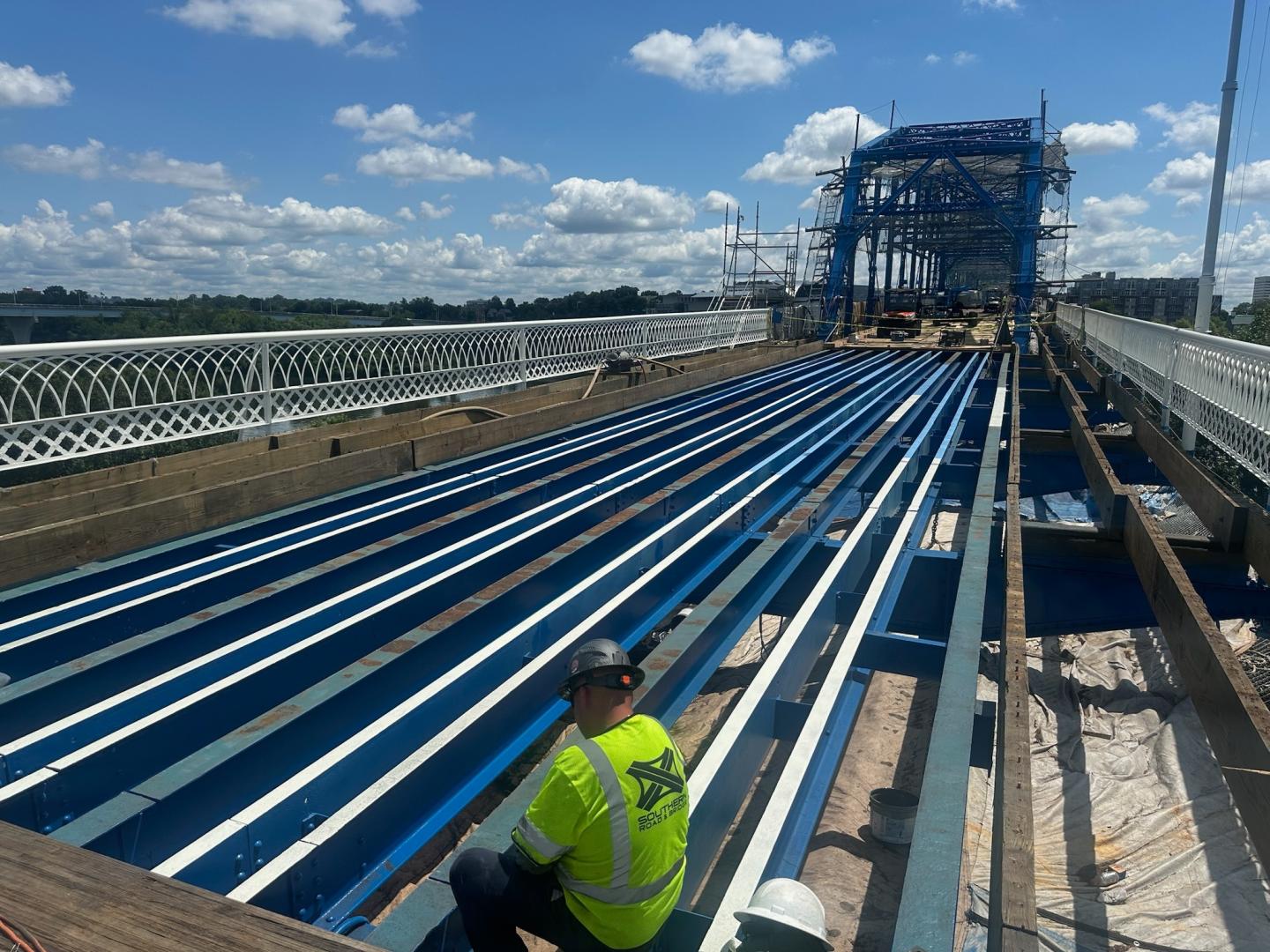
Removing, bracing, and rebuilding the metal bones holding up one of Tennessee’s oldest bridges required more than 200,000 pounds of steel, weighing about as much as 43 Volkswagen Atlas SUVs.
Image
This resulted in a total cost of $47 million, including a cost increase of about $12.6 million — primarily driven by the replacement and refurbishment of corroded steel — that was all absorbed by increased use of available federal grant dollars. No increase above the original City of Chattanooga budget was needed, resulting in no additional city tax dollars spent. This was also accomplished without delaying the reopening date of September 26, 2026.
If laid end-to-end, the replacement steel beams that workers tore out and replaced to save the bridge would stretch for 8,340 feet, equal to the height of 28 Republic Centers stacked on top of one another, or about six Empire State Buildings.
“While it’s true that this is a historic bridge that has been sitting over the water for 136 years with all that entails, anyone who has spent any time with me knows that I refuse to kick the can down the road on projects of generational importance to our city’s well-being,” said Mayor Tim Kelly. “In spite of the 94 tons of rusted steel beams we had to rip out and replace, I’m proud to report that the Walnut Street Bridge repair is on time and will not require additional city funds to complete.”
The rehab effort required the replacement of large portions of the vintage bridge: More than 1 out of every 4 load-bearing steel beams had to come out. More than 9 out of every 10 of the suspension trusses had to be overhauled due to heavy rust where the components link together. Of the load-bearing structures that were not replaced, 7% had to have additional steel bracing installed to strengthen the bridge.
All of this, including subsequent sanding and painting, was required to be accomplished without dropping any material into the Tennessee River.
As part of the repairs, contractors installed a comprehensive chain-link work platform along the entire bridge, allowing workers for the first time to closely inspect and repair portions of the bridge, a task that would have been nearly impossible without this specialized equipment. While nearly all above-deck repairs were accurately outlined in the original plans, when the decking was torn out and inspection platform installed, it became clear that additional corroded steel supports would have to be pulled out and replaced.
In addition to the structural overhaul, workers also installed new, weather resistant wood decking, rewired the entire bridge to support improved lighting and security cameras, repaired handrails, and made accessing the bridge easier for residents with disabilities.
Workers have also repainted the bridge “Chattanooga blue” in segments as other work was completed.
About the bridge:
Construction, Design and Initial Use:
- The Walnut Street Bridge was constructed in 1890.
- The bridge was designed by the noted bridge architect Edwin Thacher for the Smith Bridge Company of Toledo, Ohio.
- It spans the Tennessee River, connecting the north shore of Chattanooga to the city's downtown.
- The bridge utilizes a particular kind of truss system known as a Pennsylvania (Petit) truss, characterized by a combination of small and large diagonal braces, creating a series of triangles.
- The Pennsylvania truss is a sub-type of the Pratt truss, used for longer spans where additional strength is required.
- The Walnut Street Bridge was primarily constructed with steel, a typical material for bridges of this period due to its strength and durability.
- Using steel also allowed for the creation of the slender, elegant profiles characteristic of truss bridges.
- Initially, the bridge served as a connector for horse-drawn wagons and pedestrians.
- Later on, it accommodated motor vehicle traffic as well.
- It was a vital transportation route, enhancing connectivity and economic activity in the region.
First Closure and Renovation:
- The bridge was closed to motor vehicle traffic in 1978 due to concerns about its structural integrity.
- By 1980, the city was discussing cutting the bridge into sections, blowing them up and dropping them into the Tennessee River.
- However, in the 1990s, there was a concerted community effort to preserve and repurpose the bridge.
- In 1990, it was added to the National Register of Historic Places.
- After replacing the asphalt with wood planks and repainting the steel, the Walnut Street Bridge was reopened in 1993 as a pedestrian bridge.
Present Day:
- The Walnut Street Bridge is one of the world’s longest pedestrian bridges at 2,376 feet (724 meters or almost 1/2 mile).
- Workers began the present-day overhaul in March 2025, with work slated to complete in September 2026.
- Mayor Tim Kelly directed the overhaul to avoid closing the iconic bridge to pedestrians amid mounting structural concerns.
The Walnut Street Bridge is not just a functional structure but also a symbol of Chattanooga’s historical development. It serves as a reminder of the city’s past, its growth over the years, and the importance of the Tennessee River in the development of Chattanooga.